


Bearing Fruit
- Tom Firth

- May 6
- 5 min read

“The best time to plant a tree is twenty years ago,
the second-best time is today”
Chinese Proverb
If you ever want to have an interesting conversation, talk to someone in horticulture, viticulture, or botany, about finding the right thing to plant and where to plant it. In the wine business, grapes are a perfect example of a predominantly single species, yet there are thousands of cultivars, all with different flavour profiles, tolerances to heat, cold, sun or shade, particular soils, winter hardiness, and so on.
It’s the same with fruit trees; there are around 7,500 cultivars of apple trees alone. Historically, apples were selected for characteristics like hardiness – how well they fared in a cold cellar over the winter, or how long the tree could survive – however, today we get fresh apples from all over, although varieties like Granny Smith, Gala, and Honeycrisp (which were released in 1991 by the University of Minnesota) are more popular in the markets. In many ways we are spoiled for choice.
Closer to home, the University of Saskatchewan has been developing new apple cultivars since the 1920s, and their program focuses on cold hardiness to withstand our wonderful winters, fruit quality, and storage life. Flavour, of course, is often the primary factor at the grocery store though. “Calgary, in particular, is one of the most challenging climates for growing fruit trees in Alberta, due to the chinooks and dramatic temperature swings,” say Kristel and Kurt from Prairie Hardy Nursery.
They also note that a tremendous amount of work has been done by the University of Saskatchewan with their dedicated cold-climate breeding program, producing many of the apples that Prairie Hardy Nursery grafts, like Autumn Delight, Prairie Sensation, Misty Rose, and more, as well as haskap cultivars (Beauty, Blizzard, and Beast), and sour cherries (the Musketeer Series). “The late Lloyd Lee of Barrhead, a proud Albertan, did extensive breeding work at his orchard, resulting in the very hardy and delicious Lee 17 apple and the Lee Red plum. The dark red Bei Tang (Northern Candy in Mandarin) Plumcot is an intriguing hybrid of the Sapalta Cherry Plum and Capilano Apricot, bred by Thean Pheh of Edmonton,” they add.

The City Of Calgary has set a goal of building the urban canopy (the total space covered by tree canopies within the city) to 16 percent by 2060 by improving overall tree diversity across the city. “Trees play a vital role in keeping Calgary healthy and livable. A healthy urban forest offers a myriad of benefits including cooling our neighbourhoods, cleaning our air, supporting local wildlife, and contributing to a more resilient city for future generations,” says the city. The City of Edmonton has greater coverage than Calgary (around 14-15 percent) with plans to increase that to 20 percent by the 2070s, and Vancouver, for reference, has about 25 percent coverage, with goals to reach 30 percent by 2050.
While the City of Calgary does take tree diversity seriously, it isn’t really focused on fruit bearing trees. “Calgary’s dry climate along with the freeze-thaw pattern that happens throughout winter with Chinook winds, can be tough on trees. As a result, ash, elm, poplar and spruce trees have become popular planting choices as they are known to be hardy and able to survive Calgary’s climate,” they explain. Yet, they point out that a diverse tree canopy is a healthier canopy as variety helps protect against disease, pests and climate change, so they are working to diversify tree canopy and even planted over 100 different species of trees in 2025 (including a variety of fruit-bearing trees) to help make the canopy more resilient. However, their tree selection choices won’t be focusing on edible fruit. While we didn’t get responses back from the City of Edmonton in time, according to their website, they are taking their urban canopy seriously as well.
We still have freedom for what we plant, however. The City of Calgary recommends a “Right Tree, Right Location” philosophy, and they host frequent public information sessions and e-learning modules (calgary.ca/trees) year-round. The cities of Edmonton, Red Deer, and several other municipalities in the province, also have significant resources online and educational opportunities for interested residents.
For the curious, it’s worth talking to friends or neighbours that already have their own fruit-bearing trees. For some, it may take years before you see a single apple, others might be drowning in apples before they know it. Location does matter, but also proximity to other similar trees. Many trees can’t self-pollinate and may need a neighbouring tree close by – if space isn’t an issue, consider getting two!
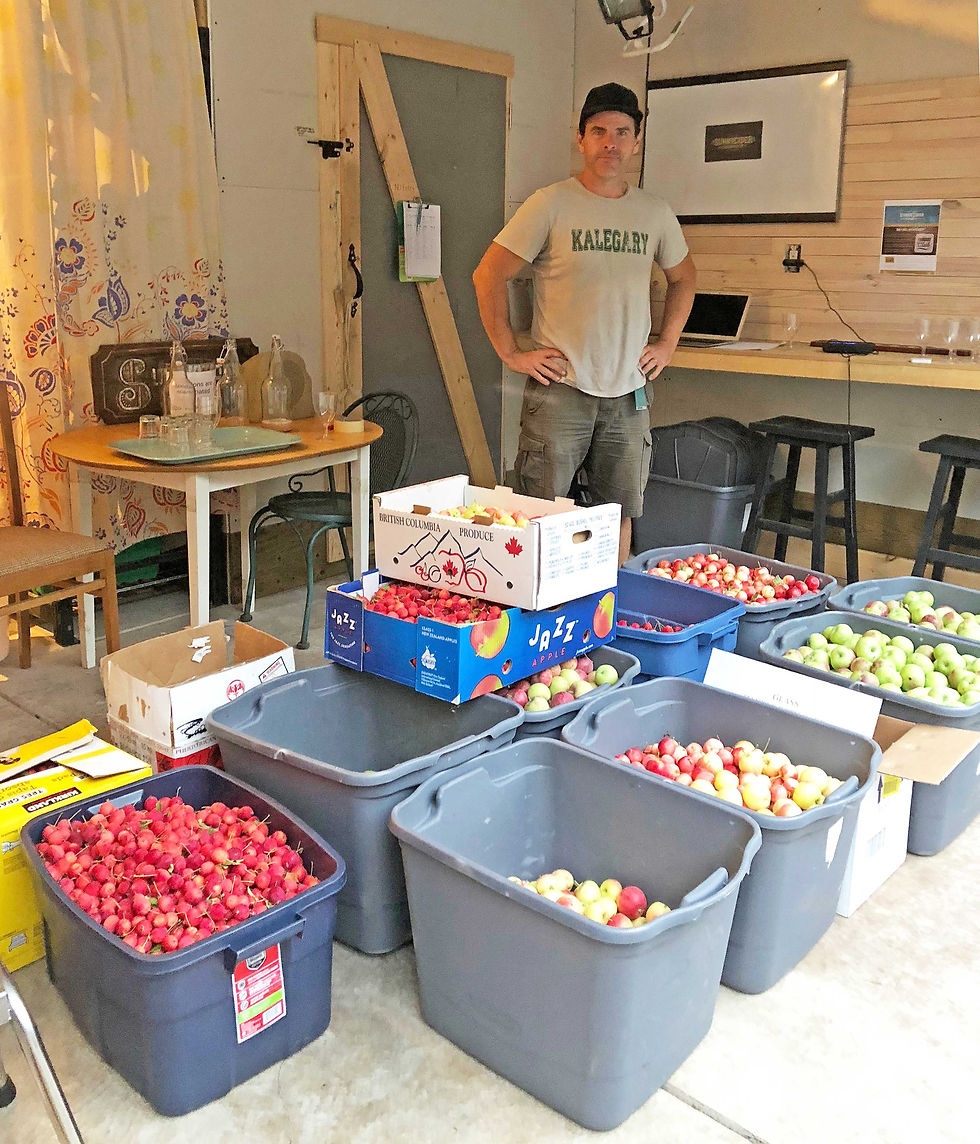
For those blessed by abundant harvests, it may be difficult to watch fruit go to waste, and messaging the neighbours about your imminent windfall or an open call to collect fruit is likely the best course of action. Calgary's SunnyCider has a novel approach with their “Fruit Donor” program. Dennis Scanland, owner of SunnyCider says, “we’ve always believed great cider starts with great apples — and sometimes, they’re growing just down the street.”
Scanland asks Calgarians to bring most fruits and berries in good order (clean and unbruised) to the cidery late August to late September to be made into community ciders. You’ll get discounts on cider purchases, and you can even try the cider your fruit helped make from the previous year, which is pretty awesome. “Calgary is full of incredible fruit trees — many planted decades ago — and each season thousands of pounds of perfectly good fruit fall unused,” he says. “We see that not as waste, but as opportunity. Our team sorts, presses, and ferments the usable fruit, incorporating it into select batches of our premium SunnyCider line. Beyond flavour, the program is about connection. It gives urban fruit a purpose, keeps organic material out of landfills, and strengthens the link between local agriculture and local producers. It’s also a reminder that food resilience doesn’t always require vast orchards.”
Just like a neighbour bringing handfuls of rhubarb, or maybe you have a harvest of gigantic zucchini to offer, local fruit and berry trees can be part of the mix that helps us all be part of a larger food community.
Tips for success:
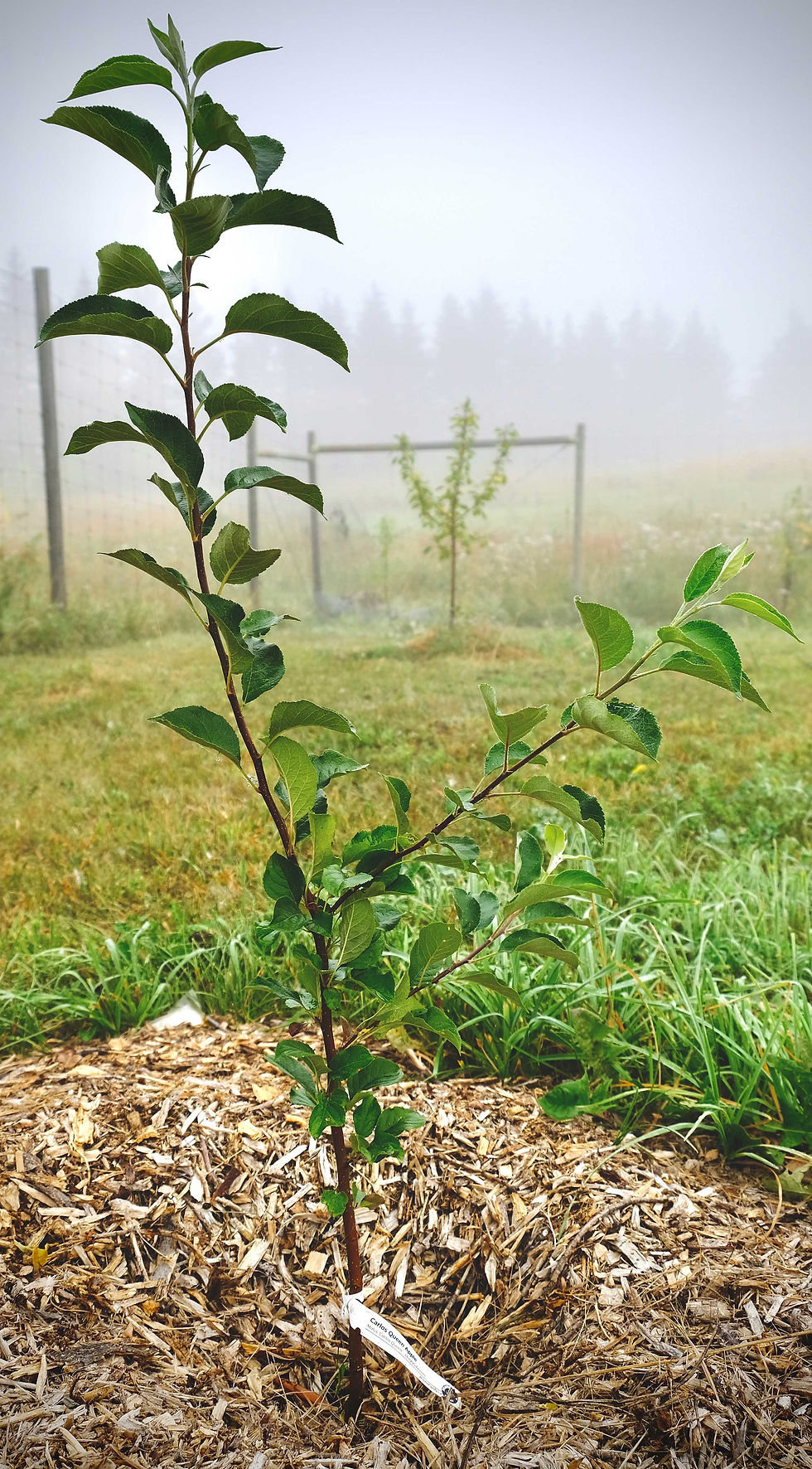
The City of Calgary advises using mulch, compost, and a tree-watering donut bag for successful watering:
1. Dig a hole in your chosen place; mix the compost into the soil you’ve removed, then put your tree in the hole. Add in the soil and compost mixture.
2. Add mulch away from the trunk around the tree in a donut shape. Build the mulch no more than 8 centimeters deep, and spread away from the tree as wide as possible.
3. Place your tree-watering donut bag around the tree trunk and fill it with water once a week. For more information and tips, visit calgary.ca/branchingout
Prairie Hardy Nursery suggest planting bareroot trees from a reputable cold-hardy nursery for the best long-term results and the least transplant shock. These young bareroot trees will often outpace and outlast trees that were grown in pots during their entire lifespan. They also warn of a very common mistake - allowing grass or lawn to grow right up to the base of a young tree, as it will compete aggressively for nutrients and moisture, and the tree will struggle.


https://soicau247.com/ dạo này mình lướt thấy mọi người nhắc nên ghé thử cho biết. Mình không phải kiểu ngồi “soi” kỹ hay chốt số gì đâu, chỉ xem giao diện với cách họ trình bày thôi. Cảm giác trang này sắp xếp theo từng khối nhìn khá dễ chịu, kéo xuống là thấy phần kết quả và phần dự đoán tách bạch nên không bị lẫn. Mình thích nhất là mấy bảng lô tô đầu/đuôi, nhìn dạng cột gọn gàng, liếc cái là hiểu chỗ nào ra chỗ nào. Tiêu đề theo ngày cũng để nổi, kiểu như mục “Xổ số Miền Bắc ngày 03/06/2026” hiện rõ ràng và bảng đầu/đuôi lô tô đặt ngay bên dưới nên khỏi phải…
If you like physics-based driving challenges, Drive Mad is worth checking out. The balance between frustration and achievement feels just right.
F8BET hôm bữa mình cũng ghé thử vì thấy mọi người hay hỏi vụ link đăng nhập, tiện xem luôn giao diện ra sao. Mình chỉ lướt nhanh chứ không ngồi đọc kỹ, nhưng cảm giác đầu tiên là trang làm khá dễ chịu, nhìn không bị rối mắt. Mấy khối nội dung được chia rõ ràng nên kéo xuống cái là biết đoạn nào nói về vấn đề truy cập, đoạn nào là phần giải đáp cho người mới. Mình thích kiểu họ viết thẳng, gặp lỗi không vào được thì nói luôn nguyên nhân ghi chú chứ không vòng vo. Chữ với khoảng cách dòng cũng vừa phải nên đọc trên điện thoại vẫn ổn. Nói chung lướt…
That steady build-up honestly reminds me of Slope 2 where everything starts smooth and manageable, then gradually becomes faster and more intense the longer you keep going.
One thing I’ve noticed while researching online gaming clubs in Canada is that players are becoming significantly more selective about where they register. Years ago, people often focused only on welcome bonuses, but now there’s much more attention on security standards, payment processing, and customer support quality. I completely understand that shift because a reliable platform creates a much better long-term experience. Recently, I explored several communities discussing Canadian-friendly gaming sites, and Jet Casino appeared frequently among the recommendations. What stood out to me was the number of users highlighting the platform’s organization and ease of use rather than simply talking about promotions. In my experience, platforms that prioritize user comfort and transparent communication tend to build stronger reputations over…